Global Politics
India Updates Arunachal Map, China Objects to 27 Names
Published On:
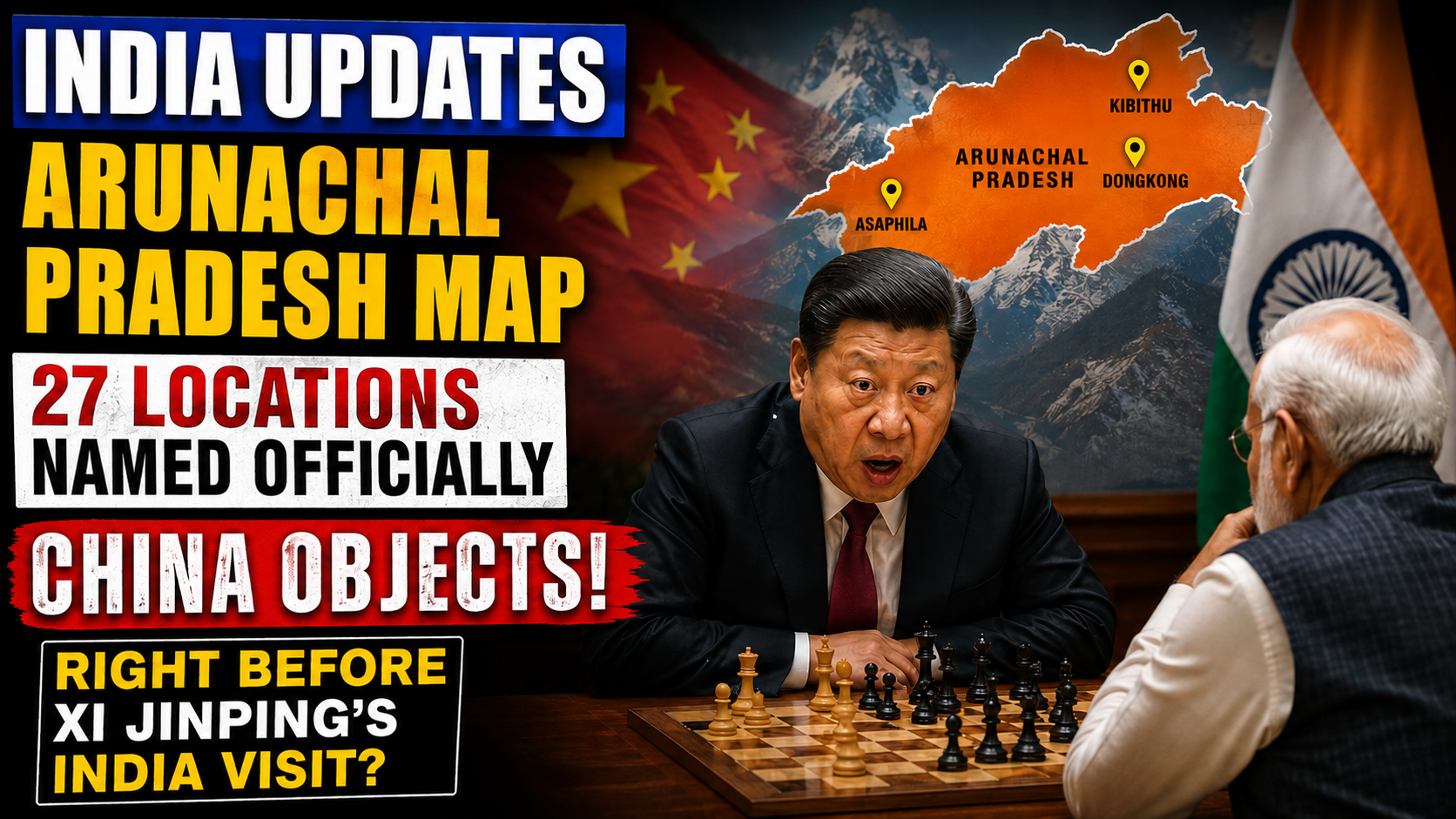
China is reacting strongly to India’s latest move over Arunachal Pradesh. India has officially updated its map and standardized the names of 27 locations in the northeastern state, including mountain passes, a high-altitude lake and other geographical features. The move comes after years of China attempting to assign its own names to locations in Arunachal Pradesh.
The timing is particularly significant. China claims Arunachal Pradesh as “Zangnan” or “South Tibet,” but India has consistently rejected these claims. New Delhi has repeatedly stated that Arunachal Pradesh is, has been and will remain an integral part of India.
China has previously released multiple lists of what it calls “standardized” names for locations in Arunachal Pradesh. These efforts have been described by India as attempts to create a false narrative about territorial ownership.
India’s latest map goes beyond simply naming locations. Reports say it also highlights three areas that India considers to be under illegal Chinese control, adding another layer of strategic messaging to the map update.
The development comes as India prepares to host the 18th BRICS Summit in New Delhi in September 2026. Reports indicate that the summit is scheduled for September 12–13, with China and Russia among the major participants expected to attract attention.
This creates an interesting diplomatic backdrop. India and China have been attempting to stabilize relations along the Line of Actual Control, while territorial disagreements remain unresolved. The latest map decision therefore carries both cartographic and geopolitical significance.
China’s state-linked media has criticized India’s decision, arguing that unilateral naming could negatively affect bilateral relations. India, however, has maintained that changing or inventing names cannot change the underlying reality of territorial administration.
The larger strategic issue is that maps are not merely geographical documents in geopolitics. Names, borders, settlements and infrastructure can all be used to reinforce territorial narratives.
For India, officially standardizing the names of Arunachal Pradesh locations sends a clear message: Beijing’s naming campaign will not be accepted as a basis for changing India’s territorial position.
The key question now is how China responds and whether this latest dispute influences the diplomatic atmosphere ahead of the BRICS Summit.
Recent Post